

Gifting Made Simple
Give the Gift of ChoiceClick below to purchase a Pine Centre eGift Card that can be used at participating retailers at Pine Centre.Purchase HereHome
What Does Graptolite Origination and Extinction Reveal about the Cause of the Late Ordovician Mass Extinction?
Coles
Loading Inventory...
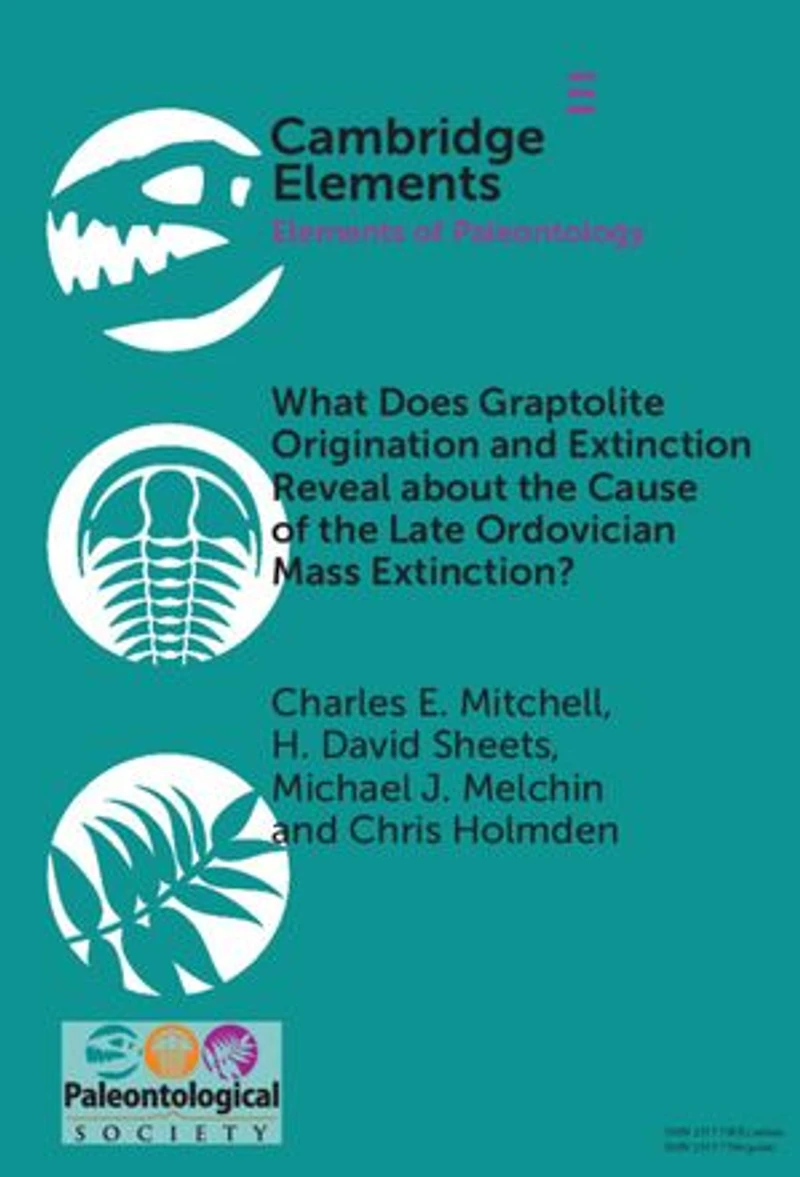
What Does Graptolite Origination and Extinction Reveal about the Cause of the Late Ordovician Mass Extinction?
By None
Current price: $23.19
Original price: $28.95
Coles
What Does Graptolite Origination and Extinction Reveal about the Cause of the Late Ordovician Mass Extinction?
By None
Current price: $23.19
Original price: $28.95
Loading Inventory...
Size: Kobo eBook
*Product information and pricing may vary - to confirm current pricing, availability, shipping, and return information please contact Coles. In the event of a pricing discrepancy, the retailer's price will apply.
Assesses the macroevolutionary turnover of paleotropical planktic graptolites during the Late Ordovician Mass Extinction (LOME) via automated sequencing and capture-mark-recapture modeling. Graptolites exhibited a succession of turnover pulses (sensu Elizabeth Vrba) that were coincident with the main phases of the Hirnantian glaciation and during which the Diplograptina experienced declining metapopulation size, elevated extinction, zero species originations, and ultimately, complete extermination. Concurrently, the Neograptina (latest Katian temperate zone immigrants) exhibit pulses of both extinction and adaptive radiation. Thus, the LOME involved intense species selection and the wholesale alteration of the clade diversity structure of a major element of the zooplankton. The LOME is unlikely to have been a direct effect of ocean anoxia or sampling bias but rather resulted from Hirnantian climate change, which altered nutrient supplies and plankton community compositions along with ecological displacement and loss of habitat that together drove the succession of turnover pulses. This title is also available as open access on Cambridge Core.
Assesses the macroevolutionary turnover of paleotropical planktic graptolites during the Late Ordovician Mass Extinction (LOME) via automated sequencing and capture-mark-recapture modeling. Graptolites exhibited a succession of turnover pulses (sensu Elizabeth Vrba) that were coincident with the main phases of the Hirnantian glaciation and during which the Diplograptina experienced declining metapopulation size, elevated extinction, zero species originations, and ultimately, complete extermination. Concurrently, the Neograptina (latest Katian temperate zone immigrants) exhibit pulses of both extinction and adaptive radiation. Thus, the LOME involved intense species selection and the wholesale alteration of the clade diversity structure of a major element of the zooplankton. The LOME is unlikely to have been a direct effect of ocean anoxia or sampling bias but rather resulted from Hirnantian climate change, which altered nutrient supplies and plankton community compositions along with ecological displacement and loss of habitat that together drove the succession of turnover pulses. This title is also available as open access on Cambridge Core.
You May Also Like


















More About Coles at Pine Centre
Shop Coles for bestselling books, toys, stationary, and so much more!
3079 Massey Dr, Prince George, BC V2N 1R4, Canada
Find Coles at Pine Centre in Prince George, BC
Visit Coles at Pine Centre in Prince George, BC
