

Gifting Made Simple
Give the Gift of ChoiceClick below to purchase a Pine Centre eGift Card that can be used at participating retailers at Pine Centre.Purchase HereHome
The Hill Tourism Blueprint: A National Framework for Sustainable Eco-Tourism in Pakistan
Coles
Loading Inventory...
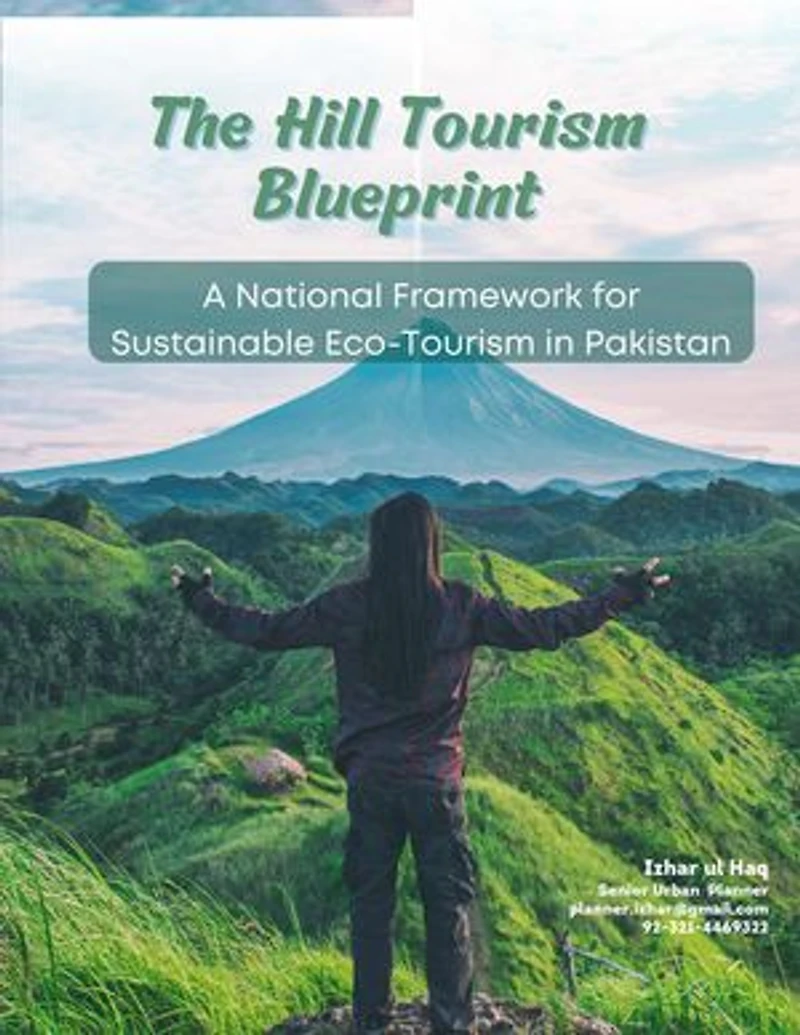
The Hill Tourism Blueprint: A National Framework for Sustainable Eco-Tourism in Pakistan
By None
Current price: $11.99
Coles
The Hill Tourism Blueprint: A National Framework for Sustainable Eco-Tourism in Pakistan
By None
Current price: $11.99
Loading Inventory...
Size: Kobo eBook
*Product information and pricing may vary - to confirm current pricing, availability, shipping, and return information please contact Coles. In the event of a pricing discrepancy, the retailer's price will apply.
Eco‑Tourism Pakistan: A Practical Guide to Places, Landscapes, and Possibilities introduces readers to Pakistan's ecological regions and the broad potential for eco‑tourism as a responsible, development‑aligned activity. Written for students, consultants, planners, policymakers, NGOs, and informed general readers, the book offers a clear, accessible overview of how landscapes, communities, and environmental considerations shape the possibilities for nature‑based tourism across the country.
Rather than functioning as a travel guide, the book serves as a structured knowledge resource. It explains the idea of eco‑tourism, outlines its principles, and situates it within Pakistan's diverse geography. Each chapter presents a region—Gilgit‑Baltistan, Khyber Pakhtunkhwa, Azad Jammu & Kashmir, Punjab, Sindh, and Balochistan—highlighting its natural character, ecological sensitivities, cultural context, and the types of activities that may be suitable if planned responsibly. The focus remains on understanding places, not promoting commercial services or specific operators.
The guidebook emphasizes the importance of reading landscapes carefully: mountains, rivers, forests, deserts, wetlands, and coasts each carry different opportunities and constraints. It encourages readers to think about eco‑tourism as part of a broader development conversation—one that must balance conservation, community benefit, and long‑term stewardship. By presenting information in a calm, structured, and non‑technical manner, the book supports early‑stage thinking, preliminary assessments, and informed dialogue among institutions and practitioners. The book is particularly useful for those engaged in planning, development, conservation, or research. It provides a shared vocabulary and a national‑scale mental map that helps readers identify where eco‑tourism may be appropriate, what factors matter, and how different landscapes should be approached. For students, it offers an accessible introduction to the relationship between environment, place, and responsible tourism. For professionals, it serves as a starting point for deeper fieldwork, feasibility studies, and policy formulation.
Eco‑Tourism Pakistan: A Practical Guide to Places, Landscapes, and Possibilities introduces readers to Pakistan's ecological regions and the broad potential for eco‑tourism as a responsible, development‑aligned activity. Written for students, consultants, planners, policymakers, NGOs, and informed general readers, the book offers a clear, accessible overview of how landscapes, communities, and environmental considerations shape the possibilities for nature‑based tourism across the country.
Rather than functioning as a travel guide, the book serves as a structured knowledge resource. It explains the idea of eco‑tourism, outlines its principles, and situates it within Pakistan's diverse geography. Each chapter presents a region—Gilgit‑Baltistan, Khyber Pakhtunkhwa, Azad Jammu & Kashmir, Punjab, Sindh, and Balochistan—highlighting its natural character, ecological sensitivities, cultural context, and the types of activities that may be suitable if planned responsibly. The focus remains on understanding places, not promoting commercial services or specific operators.
The guidebook emphasizes the importance of reading landscapes carefully: mountains, rivers, forests, deserts, wetlands, and coasts each carry different opportunities and constraints. It encourages readers to think about eco‑tourism as part of a broader development conversation—one that must balance conservation, community benefit, and long‑term stewardship. By presenting information in a calm, structured, and non‑technical manner, the book supports early‑stage thinking, preliminary assessments, and informed dialogue among institutions and practitioners. The book is particularly useful for those engaged in planning, development, conservation, or research. It provides a shared vocabulary and a national‑scale mental map that helps readers identify where eco‑tourism may be appropriate, what factors matter, and how different landscapes should be approached. For students, it offers an accessible introduction to the relationship between environment, place, and responsible tourism. For professionals, it serves as a starting point for deeper fieldwork, feasibility studies, and policy formulation.
You May Also Like









More About Coles at Pine Centre
Shop Coles for bestselling books, toys, stationary, and so much more!
3079 Massey Dr, Prince George, BC V2N 1R4, Canada
Find Coles at Pine Centre in Prince George, BC
Visit Coles at Pine Centre in Prince George, BC
