

Gifting Made Simple
Give the Gift of ChoiceClick below to purchase a Pine Centre eGift Card that can be used at participating retailers at Pine Centre.Purchase HereHome
Public Procurement in the European Union: How Contracting Authorities Can Improve Their Procurement Performance in Tende: How Contracting Authorities Can Improve Their Procurement Performance in Tenders
Coles
Loading Inventory...
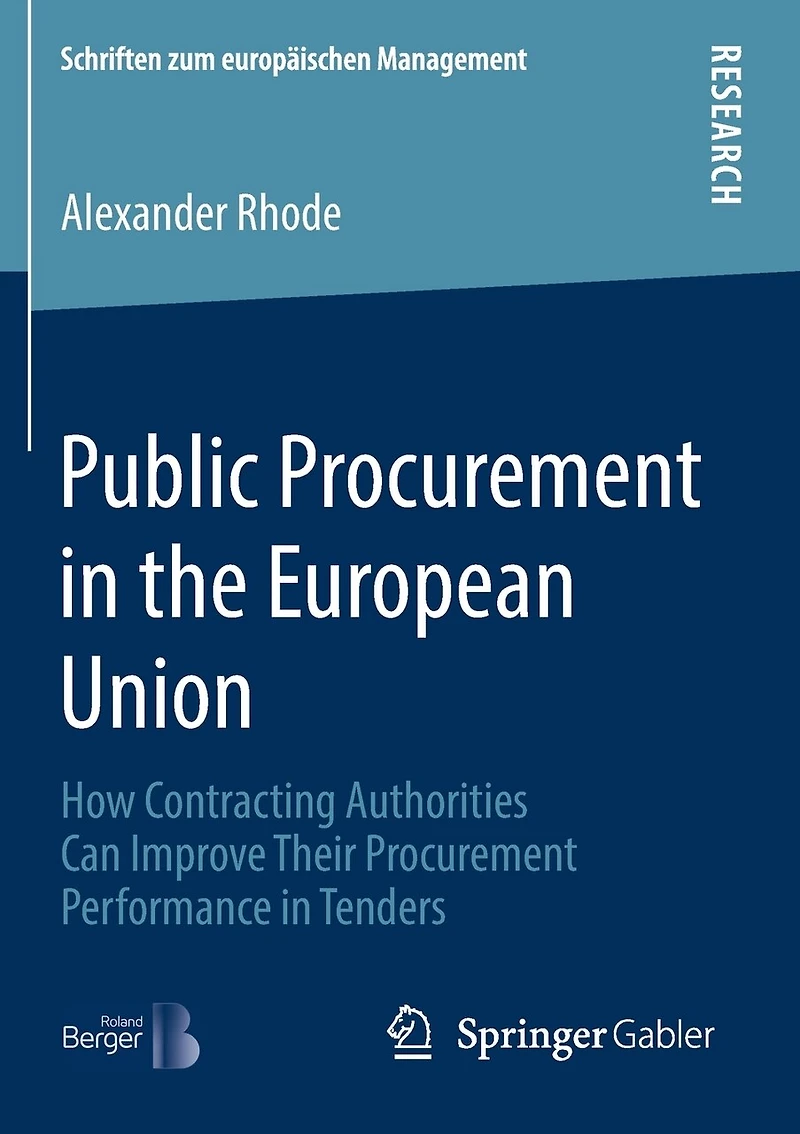
Public Procurement in the European Union: How Contracting Authorities Can Improve Their Procurement Performance in Tende: How Contracting Authorities Can Improve Their Procurement Performance in Tenders
By None
Current price: $145.95
Coles
Public Procurement in the European Union: How Contracting Authorities Can Improve Their Procurement Performance in Tende: How Contracting Authorities Can Improve Their Procurement Performance in Tenders
By None
Current price: $145.95
Loading Inventory...
Size: Paperback
*Product information and pricing may vary - to confirm current pricing, availability, shipping, and return information please contact Coles. In the event of a pricing discrepancy, the retailer's price will apply.
Alexander Rhode investigates performance-oriented measures of Contracting Authorities in public tenders conducted within the EU. He finds that Contracting Authorities can improve their performance and attract more suppliers by publishing (as precise as possible) starting prices in the beginning of a tender. First, he reports that compared with private-sector negotiations, starting prices do not create entry barriers in public procurement. Second, he finds that increased numerical precision of starting prices is linearly correlated with better performance and a higher number of bids. In public procurement, suppliers tend to attribute increased credibility to precise starting prices which reduces their (perceived) entry risks.
Alexander Rhode investigates performance-oriented measures of Contracting Authorities in public tenders conducted within the EU. He finds that Contracting Authorities can improve their performance and attract more suppliers by publishing (as precise as possible) starting prices in the beginning of a tender. First, he reports that compared with private-sector negotiations, starting prices do not create entry barriers in public procurement. Second, he finds that increased numerical precision of starting prices is linearly correlated with better performance and a higher number of bids. In public procurement, suppliers tend to attribute increased credibility to precise starting prices which reduces their (perceived) entry risks.
You May Also Like

















More About Coles at Pine Centre
Shop Coles for bestselling books, toys, stationary, and so much more!
3079 Massey Dr, Prince George, BC V2N 1R4, Canada
Find Coles at Pine Centre in Prince George, BC
Visit Coles at Pine Centre in Prince George, BC
