
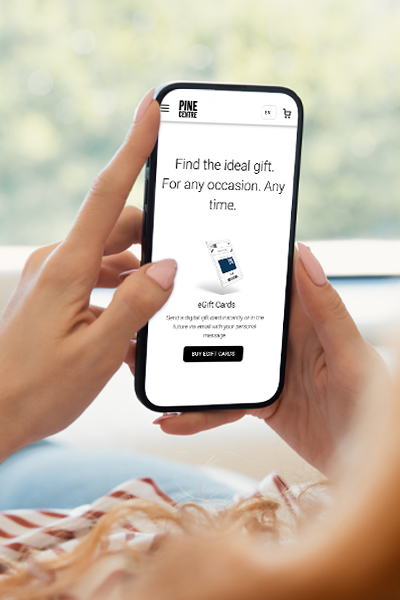
Gifting Made Simple
Give the Gift of ChoiceClick below to purchase a Pine Centre eGift Card that can be used at participating retailers at Pine Centre.Purchase HereHome
No One’s Ways: An Essay on Infinite Naming
Coles
Loading Inventory...

No One’s Ways: An Essay on Infinite Naming
By None
Current price: $54.00
Coles
No One’s Ways: An Essay on Infinite Naming
By None
Current price: $54.00
Loading Inventory...
Size: Hardcover
*Product information and pricing may vary - to confirm current pricing, availability, shipping, and return information please contact Coles. In the event of a pricing discrepancy, the retailer's price will apply.
Homer recounts how, trapped inside a monster’s cave, with nothing but his wits, Ulysses once saved himself by twisting his name. He called himself Outis: “No One” or “Non-One,” “No Man” or “Non-Man.” The ploy was a success. He blinded his barbaric host and eluded him, becoming anonymous, for a while, even as he bore a name.
Philosophers never forgot the lesson that the ancient hero taught. From Aristotle and his commentators in Greek, Arabic, Latin, and more modern languages, from the masters of the medieval schools to Kant and his many successors, thinkers have exploited the possibilities of adding “non-” to the names of man.
Aristotle is the first to write of “indefinite” or “infinite” names, his example being “non-man.” Kant turns to such terms in his theory of the infinite judgment, illustrated by the sentence, “The soul is non-_mortal.” Such statements play unexpected and often major roles in the systems of Salomon Maimon, Hegel and Hermann Cohen, before being variously and profoundly reinterpreted in the twentieth century.
Reconstructing the adventures of a particle in philosophy, Heller-Roazen’s book shows how a grammatical possibility can be an incitement for thought. Yet it also draws a lesson from persistent examples. The philosophers’ infinite names all point to one subject: us. “Non-man” or “soul,” “Spirit” or “the unconditioned,” we are beings who name and name ourselves, bearing witness to the fact that we are, in every sense, unnamable.
Homer recounts how, trapped inside a monster’s cave, with nothing but his wits, Ulysses once saved himself by twisting his name. He called himself Outis: “No One” or “Non-One,” “No Man” or “Non-Man.” The ploy was a success. He blinded his barbaric host and eluded him, becoming anonymous, for a while, even as he bore a name.
Philosophers never forgot the lesson that the ancient hero taught. From Aristotle and his commentators in Greek, Arabic, Latin, and more modern languages, from the masters of the medieval schools to Kant and his many successors, thinkers have exploited the possibilities of adding “non-” to the names of man.
Aristotle is the first to write of “indefinite” or “infinite” names, his example being “non-man.” Kant turns to such terms in his theory of the infinite judgment, illustrated by the sentence, “The soul is non-_mortal.” Such statements play unexpected and often major roles in the systems of Salomon Maimon, Hegel and Hermann Cohen, before being variously and profoundly reinterpreted in the twentieth century.
Reconstructing the adventures of a particle in philosophy, Heller-Roazen’s book shows how a grammatical possibility can be an incitement for thought. Yet it also draws a lesson from persistent examples. The philosophers’ infinite names all point to one subject: us. “Non-man” or “soul,” “Spirit” or “the unconditioned,” we are beings who name and name ourselves, bearing witness to the fact that we are, in every sense, unnamable.
You May Also Like







More About Coles at Pine Centre
Shop Coles for bestselling books, toys, stationary, and so much more!
3079 Massey Dr, Prince George, BC V2N 1R4, Canada
Find Coles at Pine Centre in Prince George, BC
Visit Coles at Pine Centre in Prince George, BC
