

Gifting Made Simple
Give the Gift of ChoiceClick below to purchase a Pine Centre eGift Card that can be used at participating retailers at Pine Centre.Purchase HereHome
Information for Innovation by Stuart MacDonald, Hardcover | Indigo Chapters
Coles
Loading Inventory...
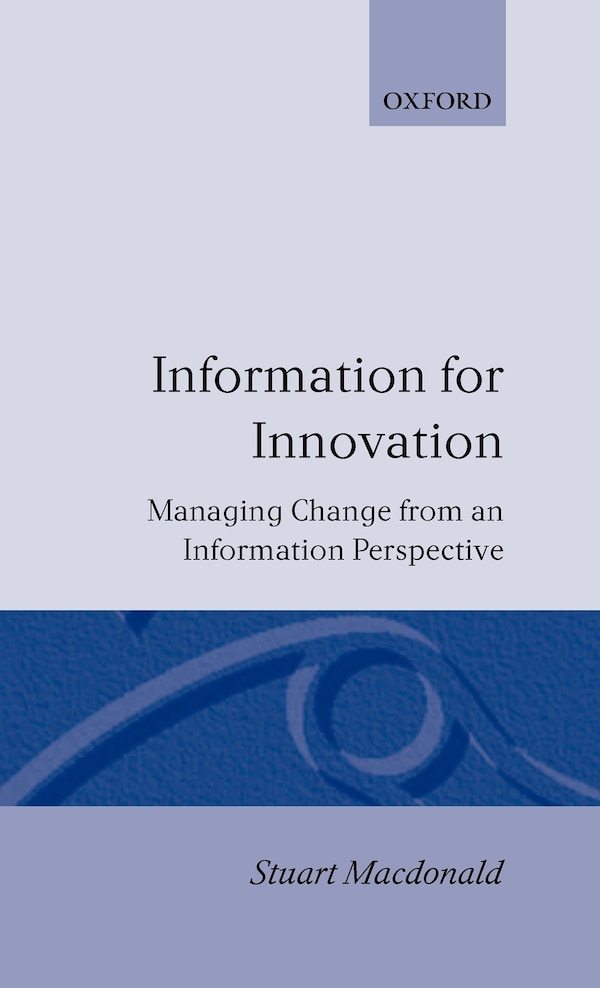
Information for Innovation by Stuart MacDonald, Hardcover | Indigo Chapters
By Stuart MacDonald
Current price: $330.00
Coles
Information for Innovation by Stuart MacDonald, Hardcover | Indigo Chapters
By Stuart MacDonald
Current price: $330.00
Loading Inventory...
Size: 2.3 x 21.6 x 560
*Product information may vary - to confirm product availability, pricing, shipping and return information please contact Coles
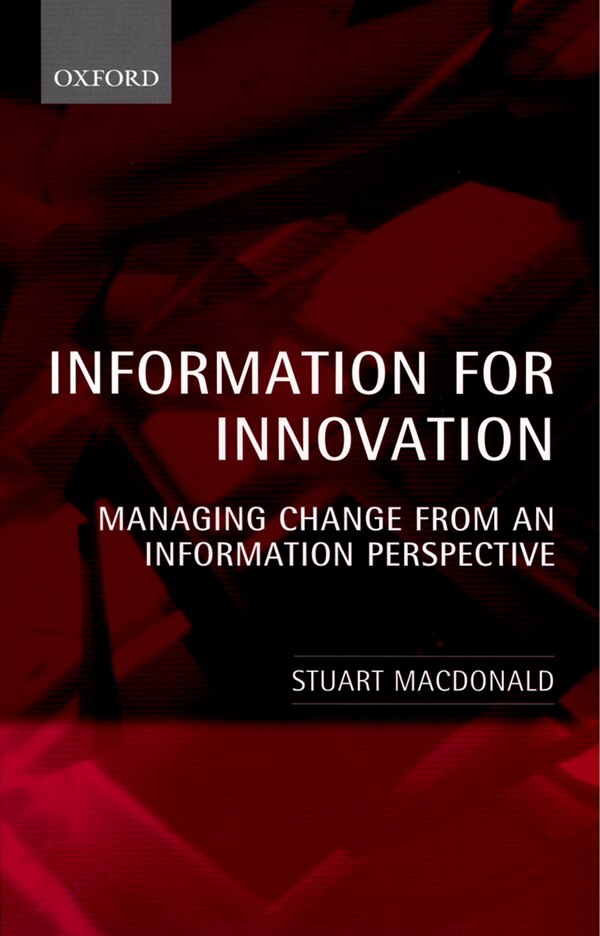
Information is not taken seriously. Much is said about the information age, the information economy, the information society, and particularly about information technology, but little about information itself. If these are important, then so is information. But information is not as othergoods: it has some peculiar characteristics. It cannot be displayed for sale without giving it away in the process. Sold, it goes to the buyer but still remains with the seller. Buying entails expressing demand in ignorance for buyers who do not know just what it is that they do not know. Suchcharacteristics have long been recognised by economists, but it is not generally economists who have most to say about the importance of information. This privilege is exercised by senior managers, who speak passionately about knowledge-based, learning organizations; by politicians and publicservants, anxious to compensate with policy and programme for the information failure of organization and market; and by specialists in telecommunications and information technology, bent on adding value to what they treat as just a commodity. All are particularly enthusiastic about the innovationwhich springs from information. Information usually requires new information. Finding, acquiring, and mixing this new information with that already in use presents problems, not least because complex information transactions are required rather than simple information transfer. Solutions can be devised, but only by accommodatingthe characteristics of information. This book contrasts the way innovation is normally regarded in a variety of areas from eighteenth-century agriculture to high technology, from technology transfer to industrial espionage, from corporate strategy to patents and independent inventors with how it appears from what is termed an'information perspective', that is one that puts information first. The results are intriguing, suggesting that radically different approaches to innovation (and organization) should be considered. | Information for Innovation by Stuart MacDonald, Hardcover | Indigo Chapters
Information is not taken seriously. Much is said about the information age, the information economy, the information society, and particularly about information technology, but little about information itself. If these are important, then so is information. But information is not as othergoods: it has some peculiar characteristics. It cannot be displayed for sale without giving it away in the process. Sold, it goes to the buyer but still remains with the seller. Buying entails expressing demand in ignorance for buyers who do not know just what it is that they do not know. Suchcharacteristics have long been recognised by economists, but it is not generally economists who have most to say about the importance of information. This privilege is exercised by senior managers, who speak passionately about knowledge-based, learning organizations; by politicians and publicservants, anxious to compensate with policy and programme for the information failure of organization and market; and by specialists in telecommunications and information technology, bent on adding value to what they treat as just a commodity. All are particularly enthusiastic about the innovationwhich springs from information. Information usually requires new information. Finding, acquiring, and mixing this new information with that already in use presents problems, not least because complex information transactions are required rather than simple information transfer. Solutions can be devised, but only by accommodatingthe characteristics of information. This book contrasts the way innovation is normally regarded in a variety of areas from eighteenth-century agriculture to high technology, from technology transfer to industrial espionage, from corporate strategy to patents and independent inventors with how it appears from what is termed an'information perspective', that is one that puts information first. The results are intriguing, suggesting that radically different approaches to innovation (and organization) should be considered. | Information for Innovation by Stuart MacDonald, Hardcover | Indigo Chapters
You May Also Like

















More About Coles at Pine Centre
Shop Coles for bestselling books, toys, stationary, and so much more!
3079 Massey Dr, Prince George, BC V2N 1R4, Canada
Find Coles at Pine Centre in Prince George, BC
Visit Coles at Pine Centre in Prince George, BC
