

Gifting Made Simple
Give the Gift of ChoiceClick below to purchase a Pine Centre eGift Card that can be used at participating retailers at Pine Centre.Purchase HereHome
Ideas That Shaped Buildings by M. Fil Hearn, Paperback | Indigo Chapters
Coles
Loading Inventory...
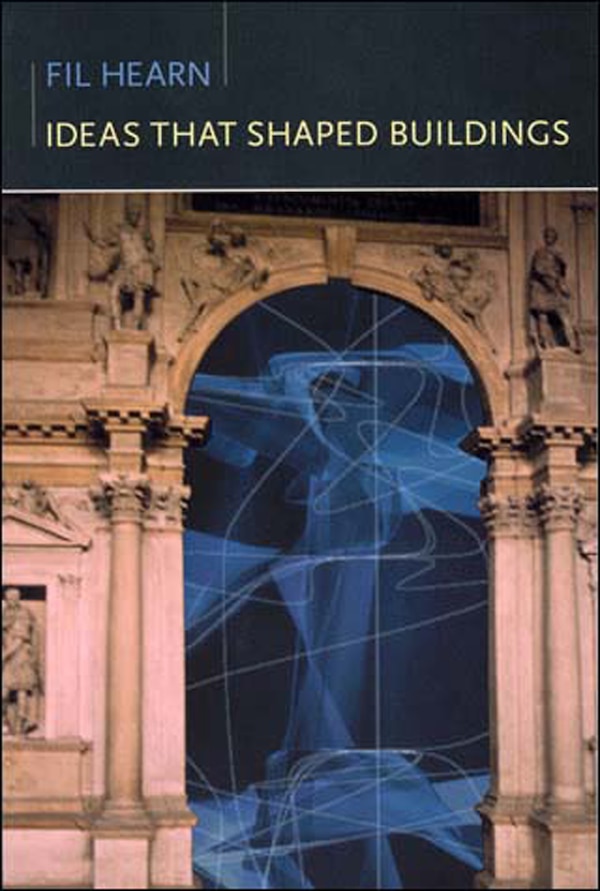
Ideas That Shaped Buildings by M. Fil Hearn, Paperback | Indigo Chapters
By M. Fil Hearn
Current price: $41.00
Coles
Ideas That Shaped Buildings by M. Fil Hearn, Paperback | Indigo Chapters
By M. Fil Hearn
Current price: $41.00
Loading Inventory...
Size: 0.67 x 7.94 x 0.8875
*Product information may vary - to confirm product availability, pricing, shipping and return information please contact Coles
Identifying the operative ideas in architectural theory from ancient Rome to the present and codifying them into coherent theoretical systems; for students, practitioners, and the general reader. In Ideas That Shaped Buildings, Fil Hearn identifies and codifies into theoretical systems the operative tenets of architectural theory from ancient Rome to the present. With this strikingly original synthesis of architectural history and theory, he constructs an intellectual armature on which virtually any architectural concept, past or present, can be positioned. Dealing mainly with the treatises that have been highly influential historically, he organizes their concepts thematically and analyzes their development through time. Straightforward and concise, Ideas That Shaped Buildings is readily accessible to architecture students, practicing architects, and the general public—indeed anyone interested in understanding the design rationale of buildings. Its overarching message is that, far from being constricting, proper knowledge and application of architectural theory is enabling and inspiring, and makes creative freedom possible by providing the conceptual awareness needed to devise a design. After an introductory history of the development of architectural theory, the text is divided into four parts. The first deals with issues relevant to all theories of architecture. The second, treating theory from antiquity to 1800, focuses on the prescriptive conventions inherent in the classical tradition. The third, treating theory after 1800, focuses on the inspirational principles prompted by rationalist perceptions of the Gothic tradition. The fourth, treating theory since 1965, deals with rationales beyond rationalism and the influence of computers on design method and design formulation. The concepts discussed are illustrated with theoretical drawings and images of actual buildings. | Ideas That Shaped Buildings by M. Fil Hearn, Paperback | Indigo Chapters
Identifying the operative ideas in architectural theory from ancient Rome to the present and codifying them into coherent theoretical systems; for students, practitioners, and the general reader. In Ideas That Shaped Buildings, Fil Hearn identifies and codifies into theoretical systems the operative tenets of architectural theory from ancient Rome to the present. With this strikingly original synthesis of architectural history and theory, he constructs an intellectual armature on which virtually any architectural concept, past or present, can be positioned. Dealing mainly with the treatises that have been highly influential historically, he organizes their concepts thematically and analyzes their development through time. Straightforward and concise, Ideas That Shaped Buildings is readily accessible to architecture students, practicing architects, and the general public—indeed anyone interested in understanding the design rationale of buildings. Its overarching message is that, far from being constricting, proper knowledge and application of architectural theory is enabling and inspiring, and makes creative freedom possible by providing the conceptual awareness needed to devise a design. After an introductory history of the development of architectural theory, the text is divided into four parts. The first deals with issues relevant to all theories of architecture. The second, treating theory from antiquity to 1800, focuses on the prescriptive conventions inherent in the classical tradition. The third, treating theory after 1800, focuses on the inspirational principles prompted by rationalist perceptions of the Gothic tradition. The fourth, treating theory since 1965, deals with rationales beyond rationalism and the influence of computers on design method and design formulation. The concepts discussed are illustrated with theoretical drawings and images of actual buildings. | Ideas That Shaped Buildings by M. Fil Hearn, Paperback | Indigo Chapters
You May Also Like















More About Coles at Pine Centre
Shop Coles for bestselling books, toys, stationary, and so much more!
3079 Massey Dr, Prince George, BC V2N 1R4, Canada
Find Coles at Pine Centre in Prince George, BC
Visit Coles at Pine Centre in Prince George, BC
