
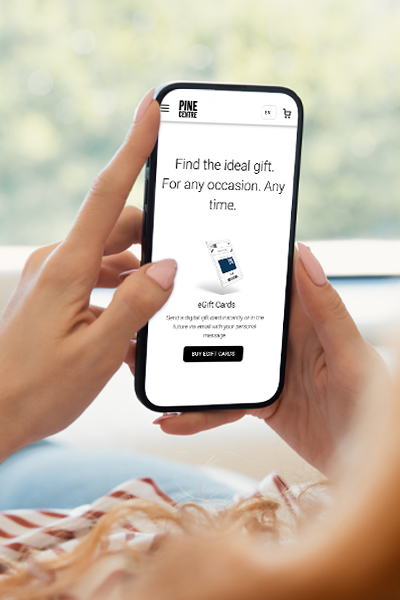
Gifting Made Simple
Give the Gift of ChoiceClick below to purchase a Pine Centre eGift Card that can be used at participating retailers at Pine Centre.Purchase HereHome
Hydrogel for Biomedical Applications: 3D/4D Printing, Self-Healing, Microrobots, and Nanogenerators
Coles
Loading Inventory...

Hydrogel for Biomedical Applications: 3D/4D Printing, Self-Healing, Microrobots, and Nanogenerators
By None
Current price: $72.95
Coles
Hydrogel for Biomedical Applications: 3D/4D Printing, Self-Healing, Microrobots, and Nanogenerators
By None
Current price: $72.95
Loading Inventory...
Size: Paperback
*Product information and pricing may vary - to confirm current pricing, availability, shipping, and return information please contact Coles. In the event of a pricing discrepancy, the retailer's price will apply.
This book highlights the latest clinical research and advancements in 3D (bio)printing and 4D printing using stimulus-responsive hydrogels as well as the concept of self-healing and its amalgamation with 3D printed injectable cell-laden tissue constructs. It also explores the use of metal-free "click" chemistry and enzymes such as horseradish peroxidase, hematin, tyrosinase, and transglutaminase to obtain chemically crosslinked hydrogels and the in vitro and in vivo responses. Lastly, the book briefly examines the future of drug delivery and the potentials offered by microrobotics and self-powered devices based on triboelectric nanogenerators. This book caters to biomedical researchers and clinical practitioners working in tissue reconstruction and drug/therapeutic delivery.
This book highlights the latest clinical research and advancements in 3D (bio)printing and 4D printing using stimulus-responsive hydrogels as well as the concept of self-healing and its amalgamation with 3D printed injectable cell-laden tissue constructs. It also explores the use of metal-free "click" chemistry and enzymes such as horseradish peroxidase, hematin, tyrosinase, and transglutaminase to obtain chemically crosslinked hydrogels and the in vitro and in vivo responses. Lastly, the book briefly examines the future of drug delivery and the potentials offered by microrobotics and self-powered devices based on triboelectric nanogenerators. This book caters to biomedical researchers and clinical practitioners working in tissue reconstruction and drug/therapeutic delivery.
You May Also Like









More About Coles at Pine Centre
Shop Coles for bestselling books, toys, stationary, and so much more!
3079 Massey Dr, Prince George, BC V2N 1R4, Canada
Find Coles at Pine Centre in Prince George, BC
Visit Coles at Pine Centre in Prince George, BC
