

Gifting Made Simple
Give the Gift of ChoiceClick below to purchase a Pine Centre eGift Card that can be used at participating retailers at Pine Centre.Purchase HereHome
Greenbackers, Knights Of Labor, And Populists: Farmer-labor Insurgency In The Late-nineteenth-century South
Coles
Loading Inventory...
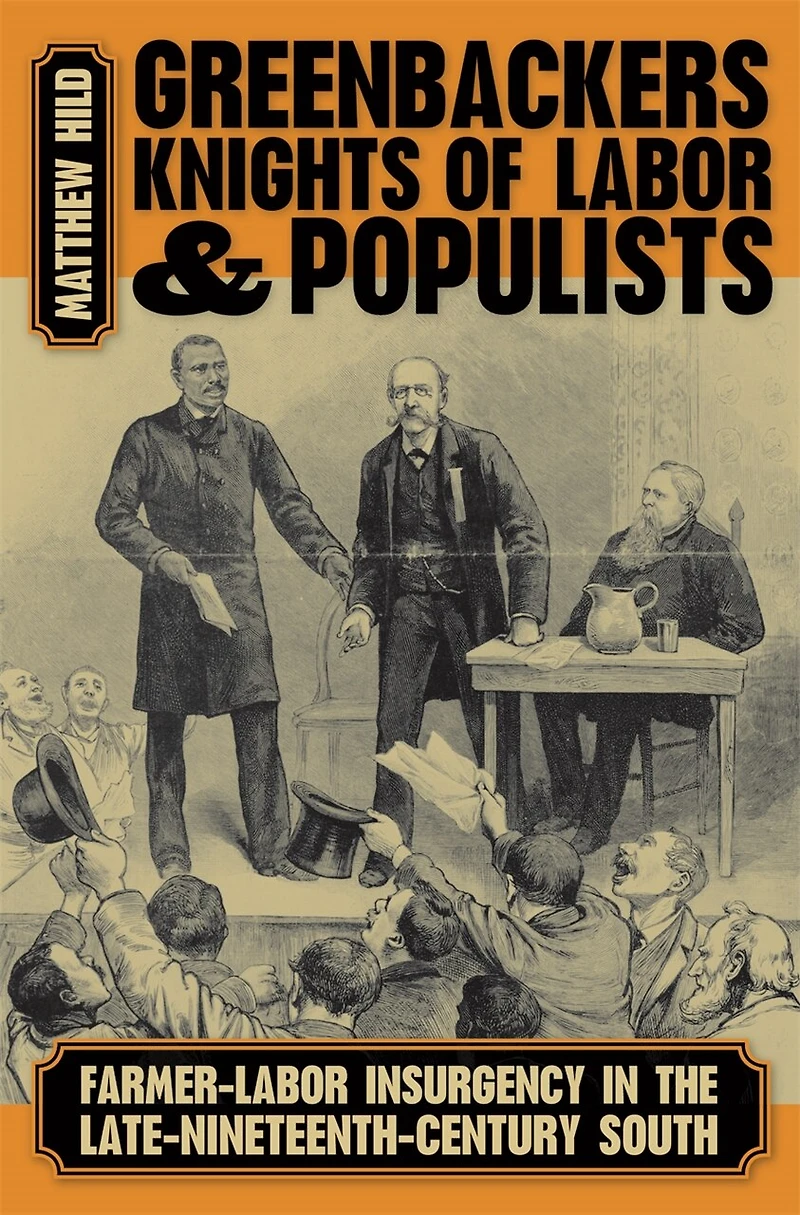
Greenbackers, Knights Of Labor, And Populists: Farmer-labor Insurgency In The Late-nineteenth-century South
By None
Current price: $49.95
Coles
Greenbackers, Knights Of Labor, And Populists: Farmer-labor Insurgency In The Late-nineteenth-century South
By None
Current price: $49.95
Loading Inventory...
Size: Paperback
*Product information and pricing may vary - to confirm current pricing, availability, shipping, and return information please contact Coles. In the event of a pricing discrepancy, the retailer's price will apply.
Historians have widely studied the late-nineteenth-century southern agrarian revolts led by such groups as the Farmers' Alliance and the People's (or Populist) Party. Much work has also been done on southern labor insurgencies of the same period, as kindled by the Knights of Labor and others. However, says Matthew Hild, historians have given only minimal consideration to the convergence of these movements.
Hild shows that the Populist (or People's) Party, the most important third party of the 1890s, established itself most solidly in Texas, Alabama, and, under the guise of the earlier Union Labor Party, Arkansas, where farmer-labor political coalitions from the 1870s to mid-1880s had laid the groundwork for populism's expansion. Third-party movements fared progressively worse in Georgia and North Carolina, where little such coalition building had occurred, and in places like Tennessee and South Carolina, where almost no history of farmer-labor solidarity existed.
Hild warns against drawing any direct correlations between a strong Populist presence in a given place and a background of farmer-laborer insurgency. Yet such a background could only help Populists and was a necessary precondition for the initially farmer-oriented Populist Party to attract significant labor support. Other studies have found a lack of labor support to be a major reason for the failure of Populism, but Hild demonstrates that the Populists failed despite significant labor support in many parts of the South. Even strong farmer-labor coalitions could not carry the Populists to power in a region in which racism and violent and fraudulent elections were, tragically, central features of politics.
Historians have widely studied the late-nineteenth-century southern agrarian revolts led by such groups as the Farmers' Alliance and the People's (or Populist) Party. Much work has also been done on southern labor insurgencies of the same period, as kindled by the Knights of Labor and others. However, says Matthew Hild, historians have given only minimal consideration to the convergence of these movements.
Hild shows that the Populist (or People's) Party, the most important third party of the 1890s, established itself most solidly in Texas, Alabama, and, under the guise of the earlier Union Labor Party, Arkansas, where farmer-labor political coalitions from the 1870s to mid-1880s had laid the groundwork for populism's expansion. Third-party movements fared progressively worse in Georgia and North Carolina, where little such coalition building had occurred, and in places like Tennessee and South Carolina, where almost no history of farmer-labor solidarity existed.
Hild warns against drawing any direct correlations between a strong Populist presence in a given place and a background of farmer-laborer insurgency. Yet such a background could only help Populists and was a necessary precondition for the initially farmer-oriented Populist Party to attract significant labor support. Other studies have found a lack of labor support to be a major reason for the failure of Populism, but Hild demonstrates that the Populists failed despite significant labor support in many parts of the South. Even strong farmer-labor coalitions could not carry the Populists to power in a region in which racism and violent and fraudulent elections were, tragically, central features of politics.
You May Also Like

















More About Coles at Pine Centre
Shop Coles for bestselling books, toys, stationary, and so much more!
3079 Massey Dr, Prince George, BC V2N 1R4, Canada
Find Coles at Pine Centre in Prince George, BC
Visit Coles at Pine Centre in Prince George, BC
