

Gifting Made Simple
Give the Gift of ChoiceClick below to purchase a Pine Centre eGift Card that can be used at participating retailers at Pine Centre.Purchase HereHome
Four Economic Topics for Studies of Antiquity: Agriculture, trade, population, and the behavior of aggregate economies
Coles
Loading Inventory...
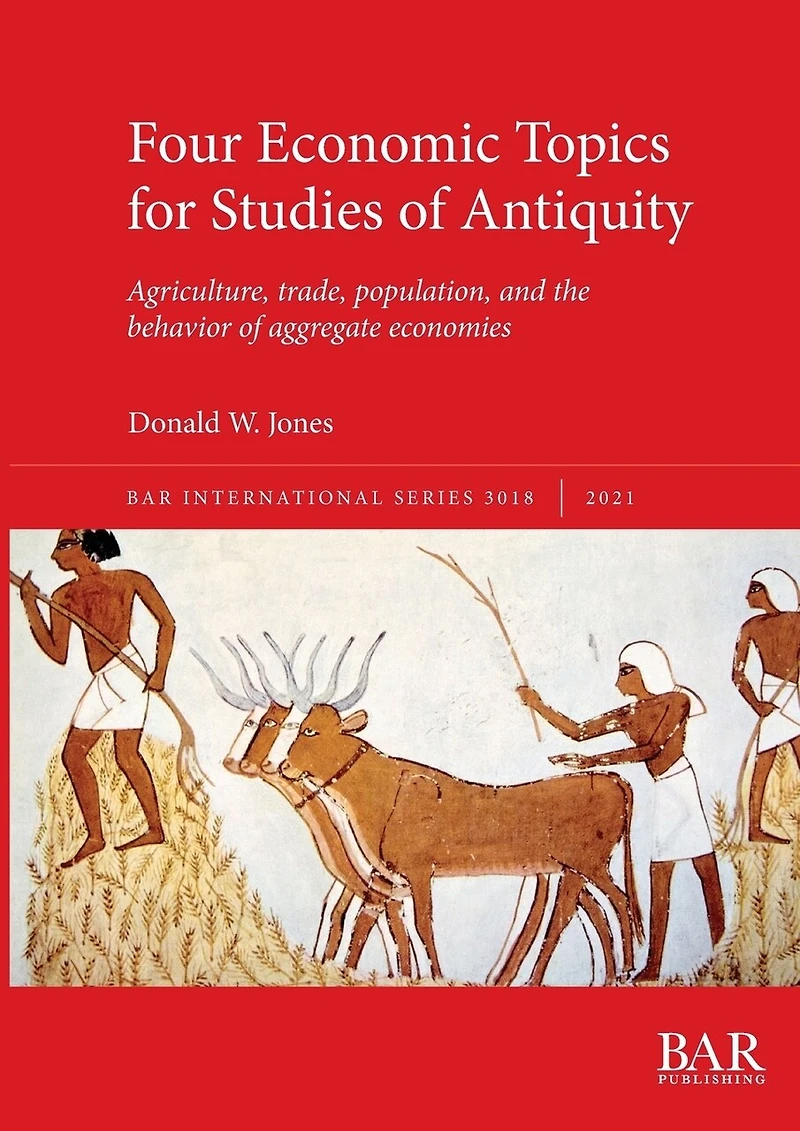
Four Economic Topics for Studies of Antiquity: Agriculture, trade, population, and the behavior of aggregate economies
By None
Current price: $184.95
Coles
Four Economic Topics for Studies of Antiquity: Agriculture, trade, population, and the behavior of aggregate economies
By None
Current price: $184.95
Loading Inventory...
Size: Paperback
*Product information and pricing may vary - to confirm current pricing, availability, shipping, and return information please contact Coles. In the event of a pricing discrepancy, the retailer's price will apply.
In this book Donald W. Jones presents a framework for how to approach four important topics that have held the attention of historians and archaeologists for decades. He offers intuitive but rigorous introductions to the contemporary economic theory and modelling dealing with agriculture, international trade, populations, and the behavior of aggregate economies. Familiarity with these models can offer nuanced insights into ancient economic behavior in data-poor as well as data-rich environments. Each chapter presents case studies from the literature of antiquity demonstrating how this could work and offering suggestions of topics where these models could be fruitfully explored.
In this book Donald W. Jones presents a framework for how to approach four important topics that have held the attention of historians and archaeologists for decades. He offers intuitive but rigorous introductions to the contemporary economic theory and modelling dealing with agriculture, international trade, populations, and the behavior of aggregate economies. Familiarity with these models can offer nuanced insights into ancient economic behavior in data-poor as well as data-rich environments. Each chapter presents case studies from the literature of antiquity demonstrating how this could work and offering suggestions of topics where these models could be fruitfully explored.
You May Also Like










More About Coles at Pine Centre
Shop Coles for bestselling books, toys, stationary, and so much more!
3079 Massey Dr, Prince George, BC V2N 1R4, Canada
Find Coles at Pine Centre in Prince George, BC
Visit Coles at Pine Centre in Prince George, BC
