

Gifting Made Simple
Give the Gift of ChoiceClick below to purchase a Pine Centre eGift Card that can be used at participating retailers at Pine Centre.Purchase HereHome
Ending Empire by Hendrik Spruyt, Paperback | Indigo Chapters
Coles
Loading Inventory...
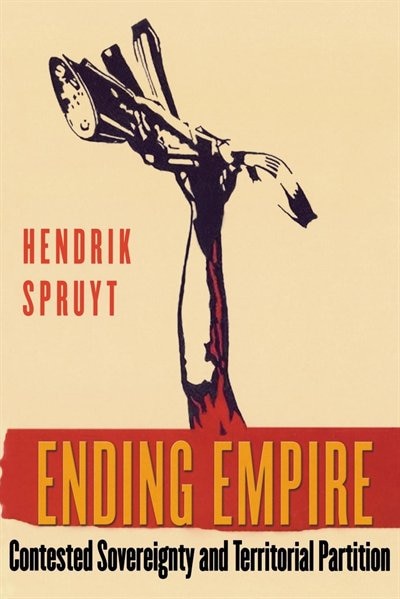
Ending Empire by Hendrik Spruyt, Paperback | Indigo Chapters
By Hendrik Spruyt
Current price: $59.95
Coles
Ending Empire by Hendrik Spruyt, Paperback | Indigo Chapters
By Hendrik Spruyt
Current price: $59.95
Loading Inventory...
Size: 1.74 x 23.5 x 482
*Product information may vary - to confirm product availability, pricing, shipping and return information please contact Coles
At the dawn of the twentieth century, imperial powers controlled most of the globe. Within a few decades after World War II, many of the great empires had dissolved, and more recently, multinational polities have similarly disbanded. This process of reallocating patterns of authority, from internal hierarchy to inter-state relations, proved far more contentious in some cases than in others. While some governments exited the colonial era without becoming embroiled in lengthy conflicts, others embarked on courses that drained their economies, compelled huge sacrifices, and caused domestic upheaval and revolution. What explains these variations in territorial policy? More specifically, why do some governments have greater latitude to alter existing territorial arrangements whereas others are constrained in their room for maneuver?In Ending Empire, Hendrik Spruyt argues that the answer lies in the domestic institutional structures of the central governments. Fragmented polities provide more opportunities for hard-liners to veto concessions to nationalist and secessionist demands, thus making violent conflict more likely. Spruyt examines these dynamics in the democratic colonial empires of Britain, France, and the Netherlands. He then turns to the authoritarian Portuguese empire and the break-up of the Soviet Union. Finally, the author submits that this theory, which speaks to the political dynamics of partition, can be applied to other contested territories, including those at the heart of the Arab?Israeli conflict. | Ending Empire by Hendrik Spruyt, Paperback | Indigo Chapters
At the dawn of the twentieth century, imperial powers controlled most of the globe. Within a few decades after World War II, many of the great empires had dissolved, and more recently, multinational polities have similarly disbanded. This process of reallocating patterns of authority, from internal hierarchy to inter-state relations, proved far more contentious in some cases than in others. While some governments exited the colonial era without becoming embroiled in lengthy conflicts, others embarked on courses that drained their economies, compelled huge sacrifices, and caused domestic upheaval and revolution. What explains these variations in territorial policy? More specifically, why do some governments have greater latitude to alter existing territorial arrangements whereas others are constrained in their room for maneuver?In Ending Empire, Hendrik Spruyt argues that the answer lies in the domestic institutional structures of the central governments. Fragmented polities provide more opportunities for hard-liners to veto concessions to nationalist and secessionist demands, thus making violent conflict more likely. Spruyt examines these dynamics in the democratic colonial empires of Britain, France, and the Netherlands. He then turns to the authoritarian Portuguese empire and the break-up of the Soviet Union. Finally, the author submits that this theory, which speaks to the political dynamics of partition, can be applied to other contested territories, including those at the heart of the Arab?Israeli conflict. | Ending Empire by Hendrik Spruyt, Paperback | Indigo Chapters
You May Also Like









More About Coles at Pine Centre
Shop Coles for bestselling books, toys, stationary, and so much more!
3079 Massey Dr, Prince George, BC V2N 1R4, Canada
Find Coles at Pine Centre in Prince George, BC
Visit Coles at Pine Centre in Prince George, BC
