
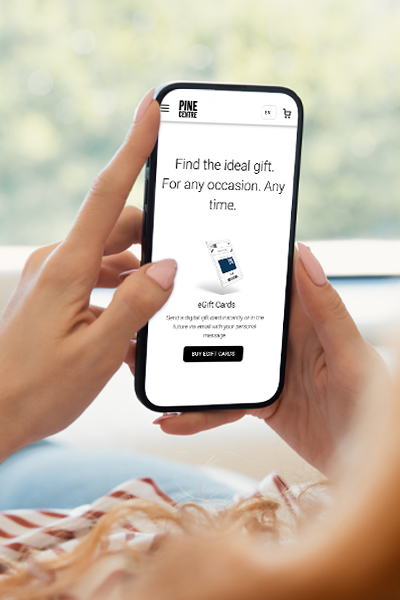
Gifting Made Simple
Give the Gift of ChoiceClick below to purchase a Pine Centre eGift Card that can be used at participating retailers at Pine Centre.Purchase HereHome
Electrical Measurement Techniques: For the Physics Laboratory
Coles
Loading Inventory...


Electrical Measurement Techniques: For the Physics Laboratory
By None
Current price: $291.95
Coles
Electrical Measurement Techniques: For the Physics Laboratory
By None
Current price: $291.95
Loading Inventory...
Size: Hardcover
*Product information and pricing may vary - to confirm current pricing, availability, shipping, and return information please contact Coles. In the event of a pricing discrepancy, the retailer's price will apply.
This book highlights the electrical engineering aspects of a typical physics laboratory. To perform a sound experiment in a physics laboratory, it is paramount that readers understand the equipment and methods used to collect the data. This includes sensors (e.g., thermocouples and vacuum gauges), amplifiers (e.g., instrumentation amplifiers and lock-in amplifiers), oscilloscopes and probes (active probes and current probes), transmission cables (50-ohm termination) and noise shielding (grounding), spectrum analyzers (FFT and heterodyne technique), ADCs and digital signal processing, convolution and correlation, data analysis such as curve fitting, and uncertainty calculations (uncertainty 'budgets'). The readers need to know about electromagnetic crosstalk, time-to-digital converters, student-t distributions, PID controllers, spectral leakage, and windows. This book helps readers understand all of that.
This book highlights the electrical engineering aspects of a typical physics laboratory. To perform a sound experiment in a physics laboratory, it is paramount that readers understand the equipment and methods used to collect the data. This includes sensors (e.g., thermocouples and vacuum gauges), amplifiers (e.g., instrumentation amplifiers and lock-in amplifiers), oscilloscopes and probes (active probes and current probes), transmission cables (50-ohm termination) and noise shielding (grounding), spectrum analyzers (FFT and heterodyne technique), ADCs and digital signal processing, convolution and correlation, data analysis such as curve fitting, and uncertainty calculations (uncertainty 'budgets'). The readers need to know about electromagnetic crosstalk, time-to-digital converters, student-t distributions, PID controllers, spectral leakage, and windows. This book helps readers understand all of that.
You May Also Like










More About Coles at Pine Centre
Shop Coles for bestselling books, toys, stationary, and so much more!
3079 Massey Dr, Prince George, BC V2N 1R4, Canada
Find Coles at Pine Centre in Prince George, BC
Visit Coles at Pine Centre in Prince George, BC
