

Gifting Made Simple
Give the Gift of ChoiceClick below to purchase a Pine Centre eGift Card that can be used at participating retailers at Pine Centre.Purchase HereHome
Elastic Architecture: The Microscopic Physics of Gluten Scaffolding: Proteins, Carbon Dioxide, and the Brutal Mechanical Kneading of Modern Baking
Coles
Loading Inventory...
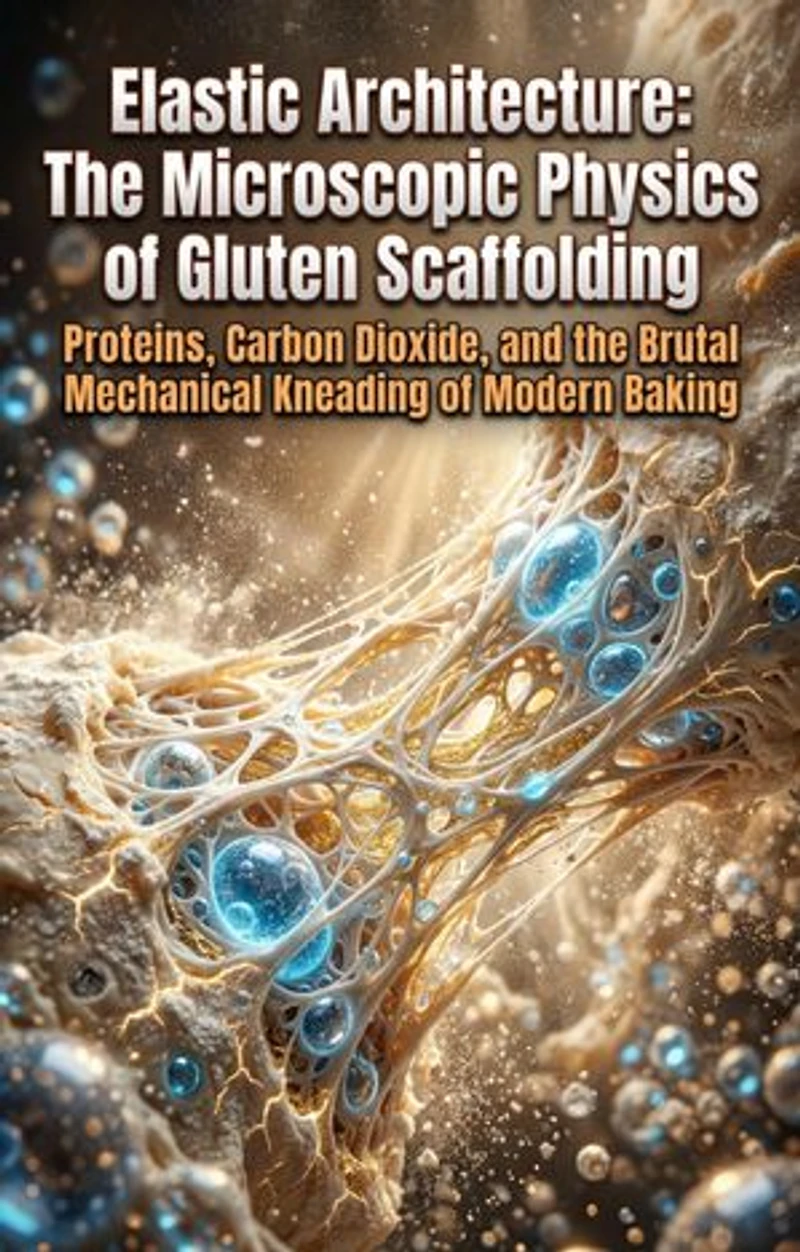
Elastic Architecture: The Microscopic Physics of Gluten Scaffolding: Proteins, Carbon Dioxide, and the Brutal Mechanical Kneading of Modern Baking
By None
Current price: $7.99
Coles
Elastic Architecture: The Microscopic Physics of Gluten Scaffolding: Proteins, Carbon Dioxide, and the Brutal Mechanical Kneading of Modern Baking
By None
Current price: $7.99
Loading Inventory...
Size: Kobo eBook
*Product information and pricing may vary - to confirm current pricing, availability, shipping, and return information please contact Coles. In the event of a pricing discrepancy, the retailer's price will apply.
Baking bread is rarely viewed as a violent act of structural engineering, but the entire process relies on forcing two inert proteins (glutenin and gliadin) to physically bond through brutal mechanical stress. When flour is hydrated and aggressively kneaded, these proteins link together to form an immense, elastic microscopic web: Gluten. This technical culinary book bypasses recipes to focus entirely on the microscopic physics of dough. The gluten network is an architectural scaffold built for one specific purpose: to trap exploding gas. As yeast eats sugar, it burps out carbon dioxide. If the gluten web is too weak, the gas escapes and the bread is flat. If the web is perfectly developed, it stretches like a balloon, trapping billions of microscopic gas bubbles, creating the airy crumb structure of the perfect loaf. We analyze the thermodynamics of the oven spring, where heat forces the trapped gas to violently expand just before the proteins coagulate into solid, permanent architecture. Master the molecular science of the kitchen. Understand the incredible physics required to stretch microscopic proteins into a web strong enough to catch air.
Baking bread is rarely viewed as a violent act of structural engineering, but the entire process relies on forcing two inert proteins (glutenin and gliadin) to physically bond through brutal mechanical stress. When flour is hydrated and aggressively kneaded, these proteins link together to form an immense, elastic microscopic web: Gluten. This technical culinary book bypasses recipes to focus entirely on the microscopic physics of dough. The gluten network is an architectural scaffold built for one specific purpose: to trap exploding gas. As yeast eats sugar, it burps out carbon dioxide. If the gluten web is too weak, the gas escapes and the bread is flat. If the web is perfectly developed, it stretches like a balloon, trapping billions of microscopic gas bubbles, creating the airy crumb structure of the perfect loaf. We analyze the thermodynamics of the oven spring, where heat forces the trapped gas to violently expand just before the proteins coagulate into solid, permanent architecture. Master the molecular science of the kitchen. Understand the incredible physics required to stretch microscopic proteins into a web strong enough to catch air.
You May Also Like



















More About Coles at Pine Centre
Shop Coles for bestselling books, toys, stationary, and so much more!
3079 Massey Dr, Prince George, BC V2N 1R4, Canada
Find Coles at Pine Centre in Prince George, BC
Visit Coles at Pine Centre in Prince George, BC
