

Gifting Made Simple
Give the Gift of ChoiceClick below to purchase a Pine Centre eGift Card that can be used at participating retailers at Pine Centre.Purchase HereHome
Cardiac Valve Allografts 1962-1987: Current Concepts on the Use of Aortic and Pulmonary for Heart Subsitutes
Coles
Loading Inventory...
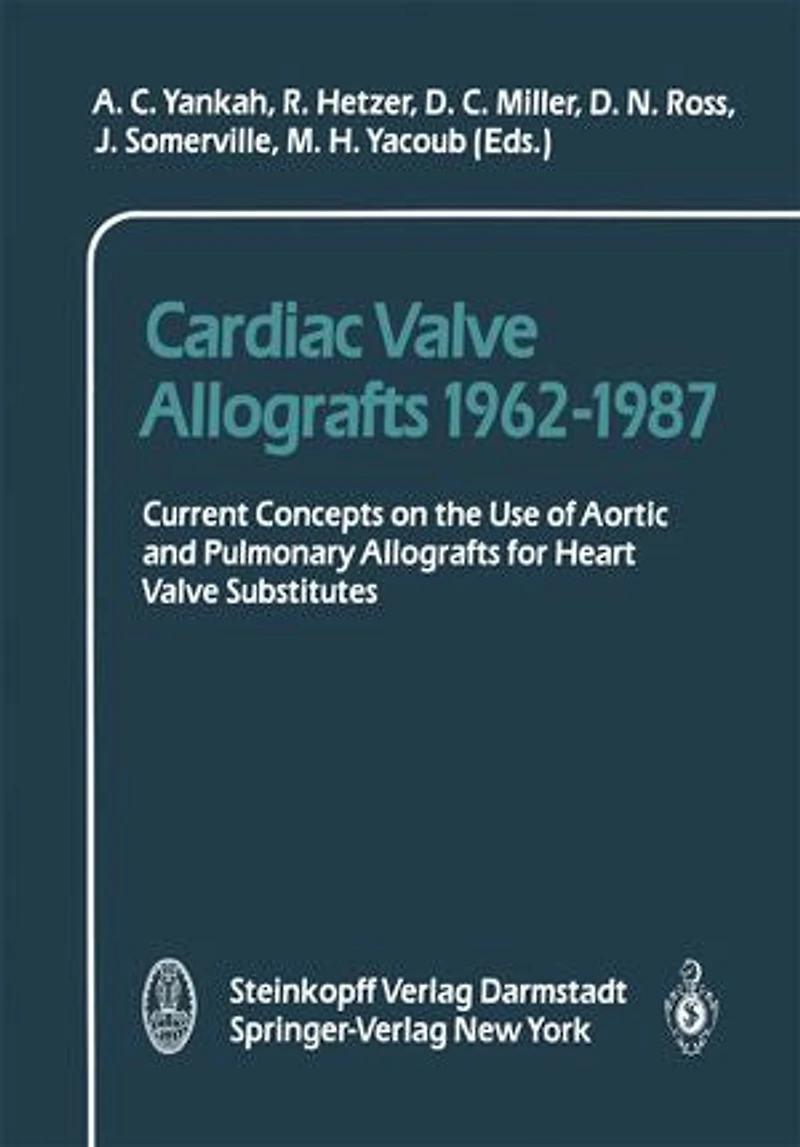
Cardiac Valve Allografts 1962-1987: Current Concepts on the Use of Aortic and Pulmonary for Heart Subsitutes
By None
Current price: $116.99
Original price: $145.12
Coles
Cardiac Valve Allografts 1962-1987: Current Concepts on the Use of Aortic and Pulmonary for Heart Subsitutes
By None
Current price: $116.99
Original price: $145.12
Loading Inventory...
Size: Kobo eBook
*Product information and pricing may vary - to confirm current pricing, availability, shipping, and return information please contact Coles. In the event of a pricing discrepancy, the retailer's price will apply.
It was the genius of Gordon Murray in Toronto that introduced the use of allografts into cardiac surgery in the 1950s. Soon after this on opposite sides ofthe world, Sir Brian Barratt-Boyes in Auckland, New Zealand, and Mr. Donald Ross in London, undertook to use allografts for the replacement of diseased aortic valves. Since that time the global interest in allografts has been patchy, episodic, and without a con sensus. Nonetheless, for the last 20 years at least three groups in the world have steadfastly pursued the development of new and relevant information concerning the use of allograft valves in humans. These are the centres of Sir Brian Barratt Boyes, Mr. Donald Ross, and Mark O'Brien in Brisbane. More recently, talented investigators, including Drs. Yankah, Yacoub, and others, have been developing information concerning the immunological aspects of the use of allografts, as well as their clinical use. No doubt, at present, cardiac valve allografts of one sort or another are the devices of choice for conduits and have an important place in the surgery of aortic valve replacement. Even so, in the mind of this writer at least, the future usefulness of allografts for the replacement of diseased cardiac valves and conduits between a ventricle and the pulmonary artery, remains problematic, and depends upon improvements in other devices for this purpose and upon improve ments that may be made in preparing and using allografts.
It was the genius of Gordon Murray in Toronto that introduced the use of allografts into cardiac surgery in the 1950s. Soon after this on opposite sides ofthe world, Sir Brian Barratt-Boyes in Auckland, New Zealand, and Mr. Donald Ross in London, undertook to use allografts for the replacement of diseased aortic valves. Since that time the global interest in allografts has been patchy, episodic, and without a con sensus. Nonetheless, for the last 20 years at least three groups in the world have steadfastly pursued the development of new and relevant information concerning the use of allograft valves in humans. These are the centres of Sir Brian Barratt Boyes, Mr. Donald Ross, and Mark O'Brien in Brisbane. More recently, talented investigators, including Drs. Yankah, Yacoub, and others, have been developing information concerning the immunological aspects of the use of allografts, as well as their clinical use. No doubt, at present, cardiac valve allografts of one sort or another are the devices of choice for conduits and have an important place in the surgery of aortic valve replacement. Even so, in the mind of this writer at least, the future usefulness of allografts for the replacement of diseased cardiac valves and conduits between a ventricle and the pulmonary artery, remains problematic, and depends upon improvements in other devices for this purpose and upon improve ments that may be made in preparing and using allografts.
You May Also Like













More About Coles at Pine Centre
Shop Coles for bestselling books, toys, stationary, and so much more!
3079 Massey Dr, Prince George, BC V2N 1R4, Canada
Find Coles at Pine Centre in Prince George, BC
Visit Coles at Pine Centre in Prince George, BC
